Turn Plain Rooms Into Austin-Worthy Experiences
Austin event lighting can turn a plain ballroom, barn, rooftop, or backyard tent into something guests talk about for months. Light controls how a room feels, how your photos look, and how people move through the night. When it is planned on purpose, even a basic space starts to feel like a custom experience.
When we talk about lighting ROI, we are not just talking about money. We are talking about emotional impact, photos that pop without heavy editing, smoother timelines, and less need for extra decor because the light is doing the work. A smart lighting plan can replace a lot of stuff on tables and walls.
In this guide, we are walking room by room, from entry to dinner to speeches to the dance floor, with ideas that fit different budgets. This works for Hill Country weddings, downtown corporate events, and private parties of all kinds. Late winter and spring in Austin are packed with conferences, retreats, and weddings, and events often flip between indoor and outdoor areas as the sun sets, so flexible lighting matters.
We have spent a lot of time in local Austin venues, seeing them from the DJ booth and the lighting console. What follows is a straight, practical breakdown of what actually works in these spaces, not just what looks good on a mood board.
Entry Space Lighting That Sets the Austin Vibe Fast
Guests form an opinion in the first few seconds, usually in the entry space. That hotel foyer or barn porch can feel flat or it can feel like an Austin-style event with intention, depending on the light.
Key lighting elements for the entry:
- Soft, even wash on entry and check-in tables so guests can read signage and see welcome cocktails
- Colors that match your brand or wedding palette, with warmer tones helping the space feel inviting after sunset
- Accent light on focal points like a step and repeat, floral install, photo spot, or branded sign
Budget tiers for entry lighting:
- Lean budget: A few well-placed uplights on walls and one simple spotlight on your main sign can make a regular lobby feel planned, not random.
- Mid-range: Color-changing LED fixtures that shift from a calm welcome look to a more energetic party look once the crowd arrives.
- Premium: Intelligent moving heads that can project patterns or logos, plus light haze if the venue allows, to add dimension and depth.
In older downtown venues or barn-style spaces out in the Hill Country, power outlets are not always where you want them. Portable, battery-powered fixtures help keep the room clean, with no power strips at guests’ feet and no cables crossing walkways.
Dinner Lighting That Flatters Faces and Food
Dinner is where guests sit, talk, and notice details. They should be able to see each other clearly without feeling like they are under office lights. The room needs to feel cozy but still camera-friendly once daylight fades.
Core lighting pieces for dinner:
- Warm, even wash over tables so faces and food look natural, not harsh
- Pin spots or tight beams for centerpieces, cake, or branded decor, so those details do not disappear after dark
- Real or faux candle accents to add depth and gentle sparkle without relying only on ceiling fixtures
Budget tiers for dinner lighting:
- Lean: A few dimmable wash lights aimed at the dining area, combined with candles on tables, soften most overhead lights.
- Mid-range: Dedicated table washes plus 6 to 12 pin spots on key decor such as the cake, bar signs, or stage backdrop.
- Premium: Zoned lighting control so your lighting tech can slowly shift the look from dinner to toasts to pre-dance, all without stopping the flow.
Practical tips:
- Talk with your photographer about color temperature so skin tones look right in camera. Good coordination here saves time later.
- Many venues have bright chandeliers. Often, turning them way down and letting professional lights take over gives a smoother, more flattering look.
- Around late winter and early spring, it can be fully dark by dinner, so count on lighting as your decor backup if skyline views or patio light fade faster than expected.
Spotlighting Speeches for Maximum Emotion and Clarity
Speeches are some of the most emotional and most recorded moments of any event. If the speaker is in the dark or lit from below by a phone, the impact drops fast. Good speech lighting keeps the focus on the person and their expressions.
Key choices for speech lighting:
- Clean, focused light on the podium, sweetheart table, or speech area so people in the back can see faces
- Controlled spill so the light is not blinding the speaker or washing out any nearby screens
- Color and brightness that match the rest of the room so photos feel consistent
Budget tiers for speeches:
- Lean: One well-placed spotlight or soft key light on the speech zone, with the rest of the room gently dimmed.
- Mid-range: A pre-programmed speech scene that lowers room lighting and brings up a flattering look on whoever is speaking.
- Premium: A full AV setup with camera-ready lighting around the stage, separate zones for slideshows, and synced audio or walk-on moments.
Lighting ROI for speeches:
- Sharper photos and video for wedding films, corporate highlight clips, and social media
- Better audience focus because eyes are naturally pulled toward the brightest, clearest point in the room
- Fewer technical hiccups that can throw off tight timelines or program runs
In Austin, many venues have speech spots that end up outside on patios, in lounges, or near bars instead of on a formal stage. A local lighting team can help you plan power and fixtures where people will actually stand, not just where the room diagram suggests.
Dance Floor Lighting That Drives the Party All Night
The dance floor is where your event story hits its peak. Whether you are in a rooftop space downtown, a barn with big doors open to the Hill Country, or a hotel ballroom by the Domain, lighting here controls the energy.
Essential layers for dance lighting:
- Movement: Moving heads, scanners, or a mirror ball give motion and rhythm that match the music
- Color and texture: Color washes and gobos that fit your brand or wedding palette and shift as the playlist changes
- Special effects: Cold sparks, haze if allowed, and even photo booth flashes can create a full, immersive party feel
Budget tiers for the dance floor:
- Lean: A basic DJ light bar and a few moving effects focused tightly on the dance floor keep the energy strong without overpowering the rest of the room.
- Mid-range: Multiple fixtures aimed across the floor, a few pre-set scenes for first dance, slow songs, and open party, plus a small cold spark moment for big photos.
- Premium: Fully programmed light shows synced with the DJ or band, effects across ceilings and walls, and interactive looks that respond to crowd moments like sing-alongs or big finales.
Why pro dance lighting is worth it:
- Guests stay on the floor longer when the room feels like a real party rather than just a bright room with music
- You get clear visual chapters in the night: calm cocktails, warm dinner, emotional toasts, and then full party mode
- Photos and video feel more cinematic and help tell your brand or wedding story in a clear way
Build a Room-by-Room Lighting Plan That Fits Your Budget
You do not have to light everything the same. A smart lighting plan targets the moments that matter most to your guests and your photos.
Simple steps to build your plan:
- List your main spaces: entry, dinner area, speech zone, dance floor, and any outdoor lounges
- Rank each by importance for guest experience and photography
- Start your lighting budget with the top impact zones, often entry and dance floor, then layer in dinner and speeches
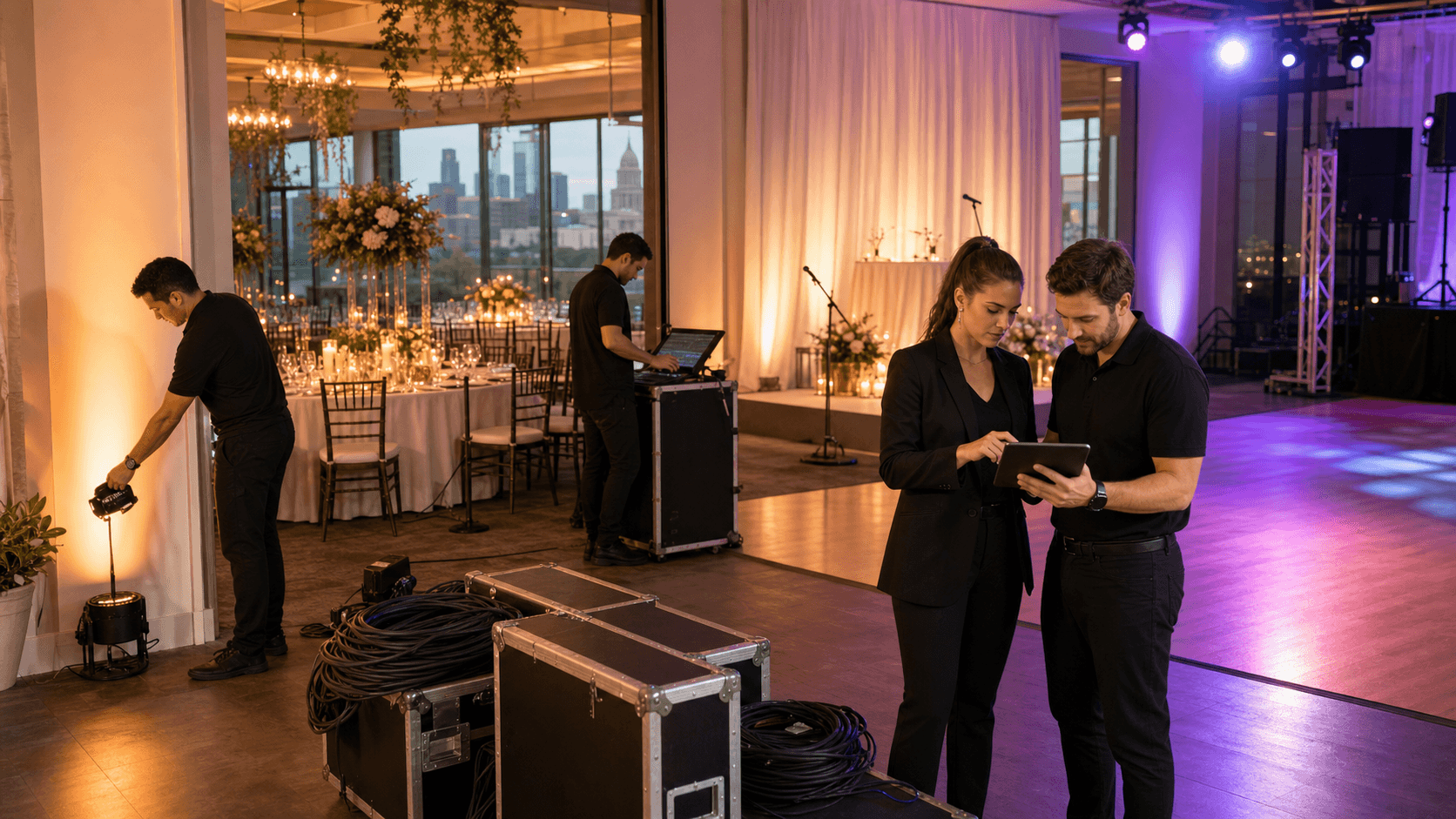
Working with an Austin event lighting team early means they can see your run-of-show, your floor plan, and your color palette, and build a good, better, best style proposal. This makes it easier to see the ROI of adding uplights, pin spots, or programmed scenes, instead of guessing which line items matter.
Seasonally, late winter and spring in Austin often bring full event weeks around festivals and conferences, plus the start of heavy wedding weekends. It helps to plan lighting that works if cocktails move inside, if a rooftop stays open longer, or if your event needs to stand out among many others happening at the same time.
When you are ready for a custom, room-by-room Austin event lighting design that fits your space and your budget, Vibe & Vision Productions is here to help with lighting, DJs, photo booths, cold sparks, and full production support. We love turning plain rooms into true Austin experiences that feel intentional from the first step in the door to the last song of the night.
Transform Your Austin Event With Custom Lighting Design
Bring your vision to life with tailored Austin event lighting solutions that match your venue, theme, and guest experience goals. At Vibe & Vision Productions, we collaborate with you to design lighting that enhances every moment, from first impressions to the final sendoff. Share a few details about your event and we will recommend a lighting plan that fits your budget and timeline. Ready to get started? Simply contact us and we will follow up with next steps.