Build a Seamless Gala Flow That Guests Feel, Not Just See
A great gala does not feel like a list of speeches and tasks. It feels smooth, warm, and fun from the first welcome drink to the last song. Guests may not know why it works so well, but you do: it all comes down to clear showflow.
Showflow is the way lighting, music, MC lines, and timing all work together. It is how we move people from cocktail hour to the awards program to the after-party without awkward pauses or energy drops. When this is done with care, guests feel guided instead of pushed, and sponsors and donors feel honored without taking over the night.
At our Austin-based DJ and AV production company, we think in showflow, not just songs and speakers. We work at a lot of nonprofit galas, corporate awards, and private celebrations, so we see what works and what does not. Below, we are sharing how to plan your gala timeline, plus cue sheet ideas, MC script tips, and ways to spotlight donors and brands without overpowering the room.
Designing Your Gala Showflow From Cocktail to Last Song
First, map the big beats of the night. Think of your gala in phases, not as one long block of time.
Common beats look like this:
- Guest arrival and cocktail mingling
- Room reveal and seating
- Welcome and mission or story moment
- Awards, presentations, or honoree segments
- Live auction or paddle raise if you have one
- Quick reset and transition
- After-party and dance floor launch
When these sections connect cleanly, you get steady momentum instead of stop-and-start energy. In Austin, springtime sunsets are later, so you can enjoy a terrace or lobby cocktail hour with some natural light, then move indoors as the sky darkens. We like to keep speeches and awards earlier in the night, while guests are fresh and not too full from dinner.
As you set the flow, line each segment up with clear goals:
- Sponsor visibility: where and how are they named or shown?
- Donor appreciation: who gets live recognition, and when?
- Leadership moments: when does your board, CEO, or host speak?
- Guest experience: where are the fun, social, and relief points?
Assign each block a time limit and an emotional tone, like celebratory, heartfelt, focused, or high-energy. That tone guides the lighting color, music style, and MC style.
A production-minded DJ and AV team needs:
- Your run-of-show with times and segment names
- Correct name pronunciations and titles
- Any scripts, sponsor lists, and special cues
- Notes on what can be cut or shortened if you run late
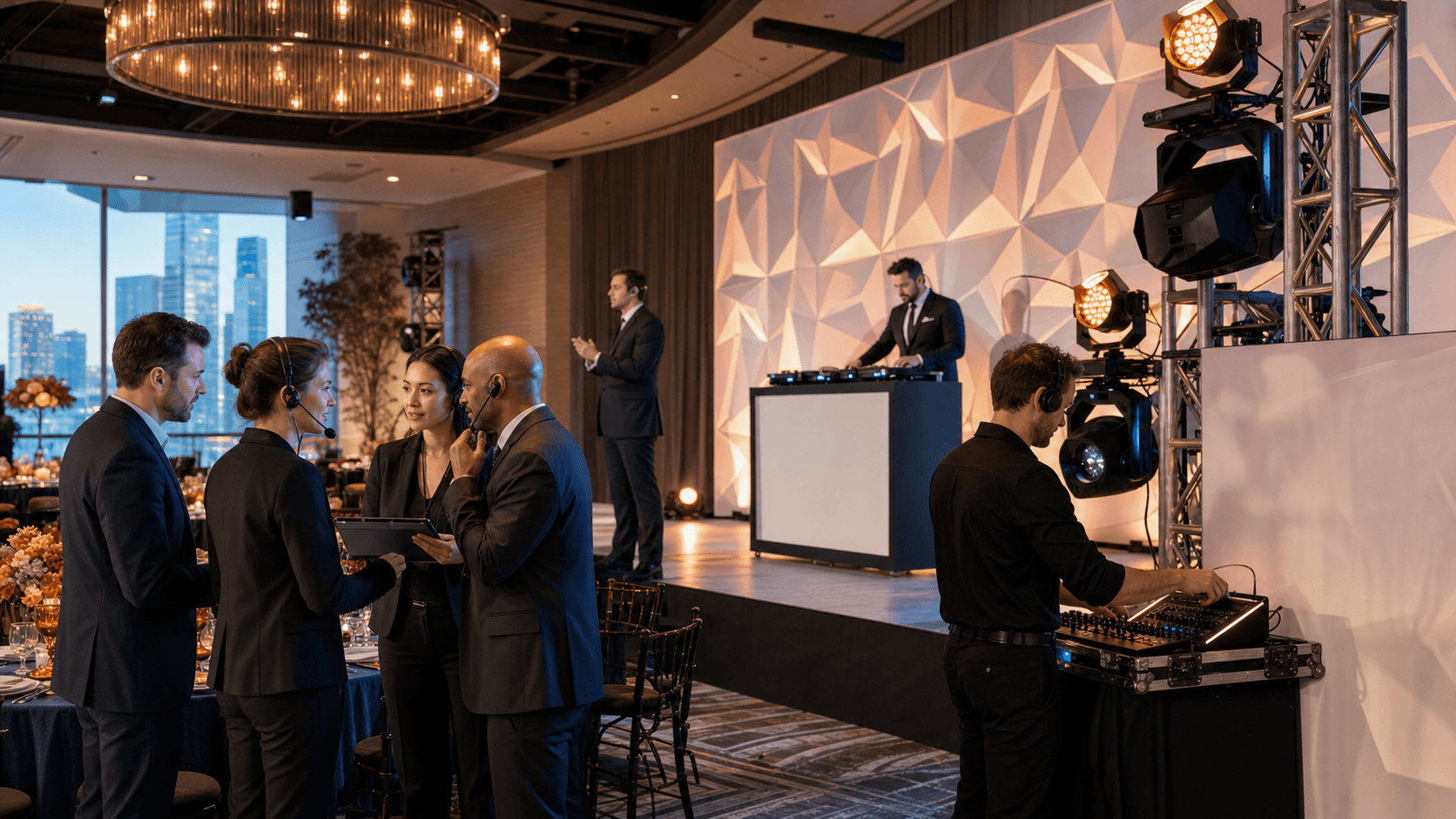
With that, we can watch the room, adjust on the fly, and help you shorten or stretch sections without losing the story.
Lighting the Night From Elegant Arrival to High-Energy After-Party
Event lighting in Austin is about more than making the room bright. It shapes how guests move, talk, and feel in each space. In spring galas, many events start with an outdoor or lobby cocktail and then shift into a ballroom or tent.
We like to think in lighting zones:
- Entry and registration
- Bars and food stations
- Photo or step-and-repeat area
- Main room and guest tables
- Stage and podium
- Dance floor and DJ area
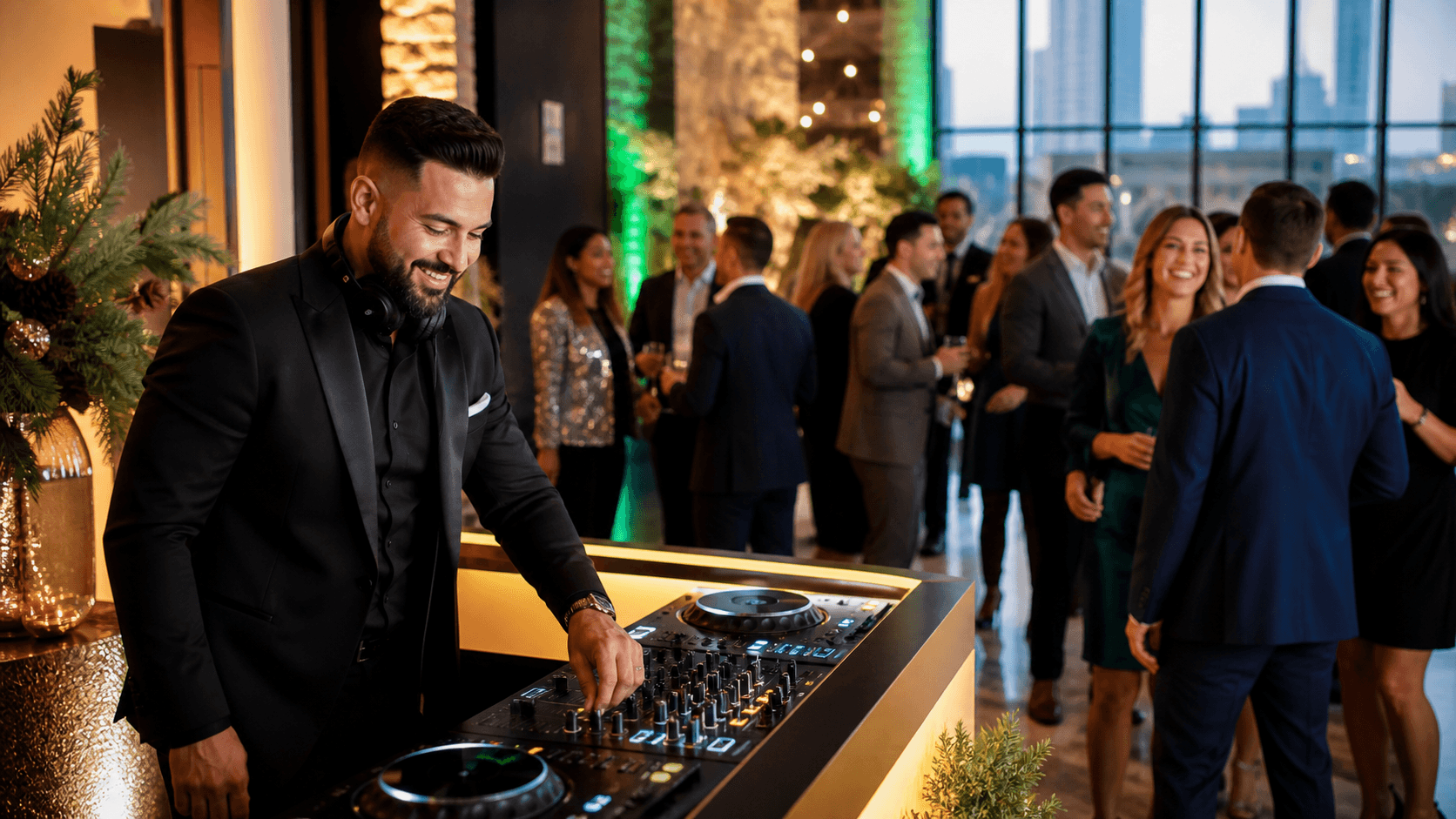
For cocktail hour, we keep light soft and warm. Gentle washes on walls, a little architectural uplighting, and maybe slow, subtle motion can make the room feel alive but not like a nightclub. Colors can nod to your brand or theme while still keeping skin tones flattering for photos.
For the awards and main program, focus belongs on the stage:
- Clean front wash on speakers so faces are clear
- Podium lighting that avoids harsh shadows
- Soft accent on awards, auction items, or decor details
- House lights bright enough to read programs and raise paddles
This keeps the room engaged without making guests feel like they are in a meeting.
For the after-party, we plan a quick, clear flip. When awards end, the lighting should signal a new phase. We might:
- Shift to bolder colors
- Add movement and patterns on walls or ceiling
- Focus brighter, more active light on the dance floor
- Use haze if the venue allows, so light beams pop
The trick is designing one coherent lighting setup that can support all three phases with changes in looks and cues, instead of building three separate rigs.
DJ Transitions, MC Scripts, and Cue Sheets That Keep Energy Up
Your DJ and MC are the narrators of the night. Their words and music choices tell guests where to go, what to feel, and what happens next. We like a mix of planned scripts and room-aware flexibility.
Music strategy by phase might look like:
- Cocktail: upbeat but chill, with familiar songs, remixes, and some Austin flavor that sets a fun mood without killing conversation
- Awards and program: short walk-up and walk-off stingers, light underscore for some intros, and silence or very low volume under deep, heartfelt stories
- After-party: a strong opener to pull people in, then sets that build and dip with “breather” tracks so the floor stays full without wearing guests out
A sample cue sheet can keep everyone aligned. Basic columns can include:
- Time and duration
- Segment name
- MC script or bullet notes
- Music notes and song ideas
- Lighting cue
- Lead person for that moment
For example: “7:10 PM, Board Chair Welcome, 30-second sponsor thank you then mission line, soft amber stage wash, no movement, low music fade at first word, planner cues board chair.”
MC scripting tips:
- Keep sponsor thanks clear, short, and heartfelt
- Note all name pronunciations right in the script
- Time-box intros and speeches if you can
- Add backup “if needed” lines in case you must trim
Share this script and cue sheet with your DJ and AV crew early. That way, your lighting fades, walk-on tracks, and mic handoffs can feel natural and in sync.
Spotlighting Donors and Brands Without Turning Off the Room
Sponsors and donors deserve the spotlight, but guests do not want to sit through a long commercial. The key is targeted, high-impact recognition instead of constant logo overload.
With event lighting in Austin venues, smart ideas include:
- Gobo logo projections on walls or floors during arrival and cocktail
- Rotating a few key sponsor logos instead of plastering one everywhere
- A special lighting look for your mission moment and major donor recognition that feels different from the rest of the night
On the audio and visual side, think:
- Short, warm MC thank-yous tied to impact, such as what a sponsor made possible
- Sponsor slides or quick reels placed at natural pauses, not while guests are eating and talking
- Lower-third graphics on IMAG or LED screens during awards instead of long stand-alone sponsor segments
You can also honor donors with thoughtful, guest-friendly touches:
- Reserved lounge areas near the action
- Branded photo booth experiences with custom overlays and backdrops
- Subtle branded bar or dessert signage
- Printed programs that carry the deeper sponsor details so the live show can stay tight and engaging
A good AV partner helps keep recognition on time and on message so sponsors feel like heroes while the party still flows.
Turn Your Next Austin Gala Into a Choreographed Experience
When you treat your gala like a live show, everything gets smoother. Thoughtful showflow, layered lighting, planned DJ transitions, clean cue sheets, and balanced donor spotlights all work together. Guests feel taken care of, your mission lands, and your sponsors are proud to be part of it.
At Vibe & Vision Productions, we love helping Austin planners, nonprofits, and corporate teams turn a simple event timeline into a choreographed experience guests remember long after the last song.
Transform Your Austin Event With Expert Lighting Design
Our team at Vibe & Vision Productions is ready to customize lighting that matches your venue, your crowd, and your vision. Explore how our event lighting in Austin can elevate everything from intimate gatherings to large-scale productions. When you are ready to start planning, reach out through our contact us page and we will help you design a lighting experience your guests will remember.