Backyard parties with a DJ can feel like a mini music festival without leaving home. To pull that off in Austin, you have to think about more than just a speaker and a playlist. Sound coverage, power, city rules, your neighbors, and summer weather all play a big part in whether the night feels smooth or stressful.
In this guide, we will walk through how to plan a smart DJ setup for fun parties with a DJ in your own yard. We will talk about where to put speakers, how to handle power safely, how to respect Austin noise rules, and how to protect your gear from heat and surprise rain. We will also share a simple sample timeline you can borrow for your next backyard event.
Backyard Beats That Bring Austin Parties to Life
Austin is made for outdoor parties, especially on long summer evenings. The sun drops, the air calms down a bit, the lights come on, and people are ready to dance, eat, and hang out. A DJ in the backyard turns a regular get-together into something people talk about for a long time.
But there are a few things homeowners often miss, like:
- Sound that is too loud in one spot and too quiet in another
- Power circuits that trip right when the party gets going
- Noise complaints from neighbors or surprise visits from the city
- Heat, wind, or a quick rain shower that can shut the music down
At Vibe & Vision Productions, we focus on tying sound, lighting, and entertainment together so your yard feels like a real event space, not just a patio with speakers. With some smart planning, you can have strong dance energy without headaches.
Dialed-in Sound Coverage for Every Corner of the Yard
Backyard acoustics are tricky. Sound in open air does not bounce the same way it does inside. Fences, siding, and decks can reflect sound into odd spots, and open grass can let it drift away.
A lot of people think one big speaker will cover everything. In reality, spreading sound out with multiple speakers often works better:
- One or two main speakers near the DJ for the dance area
- Small satellite speakers for side patios or lounge spots
- Optional subwoofer near the dance floor for controlled bass
For long, narrow Austin lots, we usually like the DJ on the short end of the yard, facing in toward the house instead of toward the street. On corner lots, turning speakers away from the closest neighbor and toward the center of the yard helps keep bass where the party is. If there is a slope or a pool, the DJ often does best on the higher, more stable side so cables and gear stay safe and dry.
You also want different volume zones:
- Higher energy and louder volume right by the dance floor
- Medium level near the bar and food, so people can order and chat
- Lower, almost background level near chill seating and kids
Pros walk the yard during setup, play test tracks, and use simple sound meters to check levels. That way guests can feel the music in their body on the dance floor but still have real conversations a short walk away.
Power, Safety, and Cables That Do Not Trip Guests
A backyard DJ setup pulls more power than many people expect. You might need outlets for:
- DJ controller and laptop
- Main speakers and subwoofers
- Lighting like uplights, string lights, or dance floor effects
- Extras, such as a photo booth or special decor pieces
Home outlets can work well if they are used wisely. It helps to know which circuits also feed your kitchen, AC, or big appliances, because you do not want the music to cut out when someone makes frozen drinks. Heavy-duty, outdoor-rated extension cords and surge protectors are your friend.
Cable safety is a big deal when people are dancing, carrying drinks, and moving around. Good cable management means:
- Taping or matting cords that cross walkways
- Running cables along fences, under decks, or behind planters
- Avoiding sprinkler heads, wet grass, or puddle-prone spots
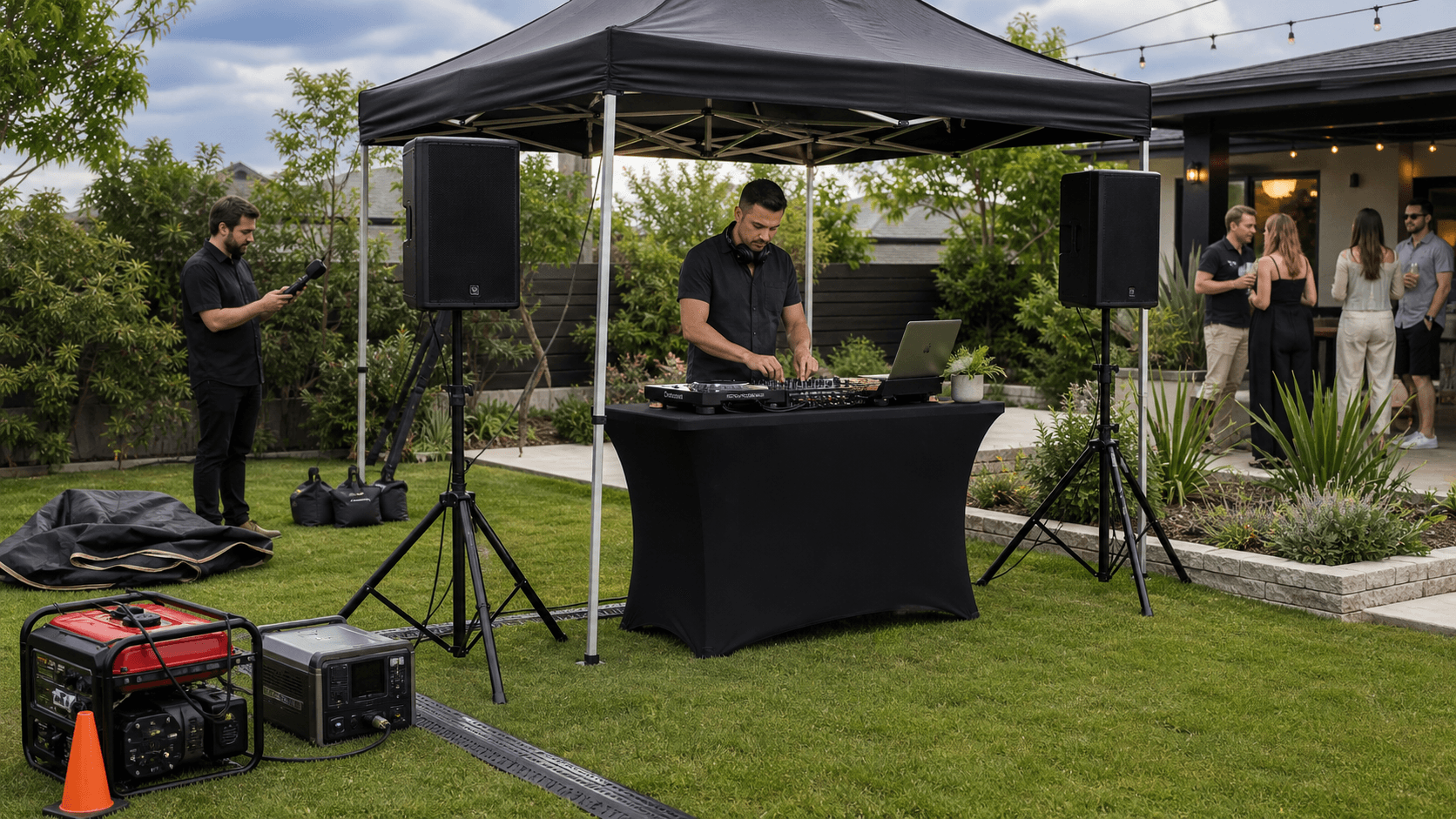
If your yard is large or outlets are far from the action, a small, quiet inverter-style generator can be a smart backup, as long as it is set up and grounded correctly. It is also important that your DJ, caterer, bar, and rental company talk about power plans so everyone is not fighting over the same two outlets at the last minute.
Austin Noise Ordinances and Neighbor-Friendly Volume
Austin has noise rules for residential areas that get more attention once summer party season heats up. There are typical quiet hours and general decibel guidelines that focus on keeping things reasonable at night.
To keep your party fun and compliant:
- Aim speakers into the yard, not toward the street or a neighbor's house
- Avoid placing subwoofers against a fence that backs up to someone's bedroom
- Set a clear volume cap for later hours, especially on weeknights
Good neighbor outreach goes a long way. A quick text or note that says when the party starts and ends, plus a real phone number in case they need something, helps people feel included instead of annoyed.
A smart music schedule also supports neighbor peace:
- Higher energy and a bit more volume during prime evening hours
- Smoother tracks and lowered bass as it gets later
- A clear "last song" run so people know the night is wrapping up
A DJ who works a lot of Austin neighborhoods will be used to watching not just the dance floor but also the surroundings, and adjusting bass and volume to keep the vibe happy and complaint-free.
Weather-Proofing Your Backyard DJ Setup
Summer in Austin means hot afternoons, sticky evenings, and the chance of a surprise shower. Heat and water are not friendly to gear, so planning ahead matters.
Heat management tips include:
- Setting the DJ area in shade whenever possible
- Using fans near the booth to keep air moving
- Covering laptops and controllers so direct sun does not cook screens and buttons
- Timing the main party window for after the worst of the afternoon sun
Basic weather protection can save the night:
- Pop-up canopies or tents with sidewalls for wind and light rain
- Small raised platforms or sturdy tables so gear is not near ground moisture
- Sandbags on stands and tent legs to handle random gusts
- Waterproof covers for speakers when they are not actively in use
A good "go-bag" for weather surprises might include:
- Extra extension cords and power strips
- Gaffer tape and zip ties
- Plastic sheeting or trash bags for quick covers
- Clean towels for drying off surfaces
If a storm pops up, a pro team can pause the music, cover gear quickly, and shift the core setup to a covered patio, garage, or living room so the party can continue safely.
Sample Timeline for a Smooth Backyard DJ Party
Here is a simple sample timeline for a summer backyard event from 6:00 to 11:00 p.m.:
- 3:30, 5:30 p.m.: DJ arrival, setup, soundcheck, and weather check
- 6:00 p.m.: Soft background music as guests arrive, light and welcoming
- 7:00 p.m.: Dinner or main food service with relaxed, upbeat tunes
- 8:00 p.m.: Toasts or short speeches, then first open dance set
- 9:00, 10:15 p.m.: Peak dance anthems and party tracks, higher energy
- 10:15, 10:45 p.m.: Sing-alongs, throwbacks, and slower volume slide
- 10:45, 11:00 p.m.: Final songs and gentle soft-curfew sequence
You can layer in extra moments like:
- Turning on stronger lighting as the sun goes down
- Opening a photo booth once most guests have arrived
- Dropping a late-night snack reveal with a special track or announcement
The key is building in buffers: extra time for setup, a few minutes to deal with weather, and a planned slow-down in volume before local quiet hours kick in. A team like Vibe & Vision Productions can take this basic flow and tailor it for weddings, graduation parties, corporate gatherings, or non-profit celebrations, all set right in the backyard.
By thinking through sound coverage, power, noise rules, neighbor comfort, and weather, your yard can feel like Austin's next favorite party spot while still being relaxed and easy for you as the host.
Bring Your Next Party To Life With Pro DJ Energy
If you are ready to turn your event into the kind of night people talk about for weeks, let our team at Vibe & Vision Productions handle the music and flow. We specialize in creating unforgettable fun parties with a DJ that fit your crowd, your goals, and your budget. Tell us about your event and timing, and we will recommend a custom DJ and lighting plan that matches your vision. To check availability or request a quote, simply contact us today.